Tak’alik
Ab’aj is a pre-Columbian archaeological site situated near the Pacific coast of
Guatemala. In the local Kiche Maya language, it means “Place of the Standing
Stone”.
Tak’alik
Ab’aj was a major centre of culture and trade, first rising in power around the
9th century BCE, and lasting until 200 AD or later. It’s particularly
important among Central American archeological sites because it documents the
transition between the early Guatemalan Olmec people and the Mayan
civilization.
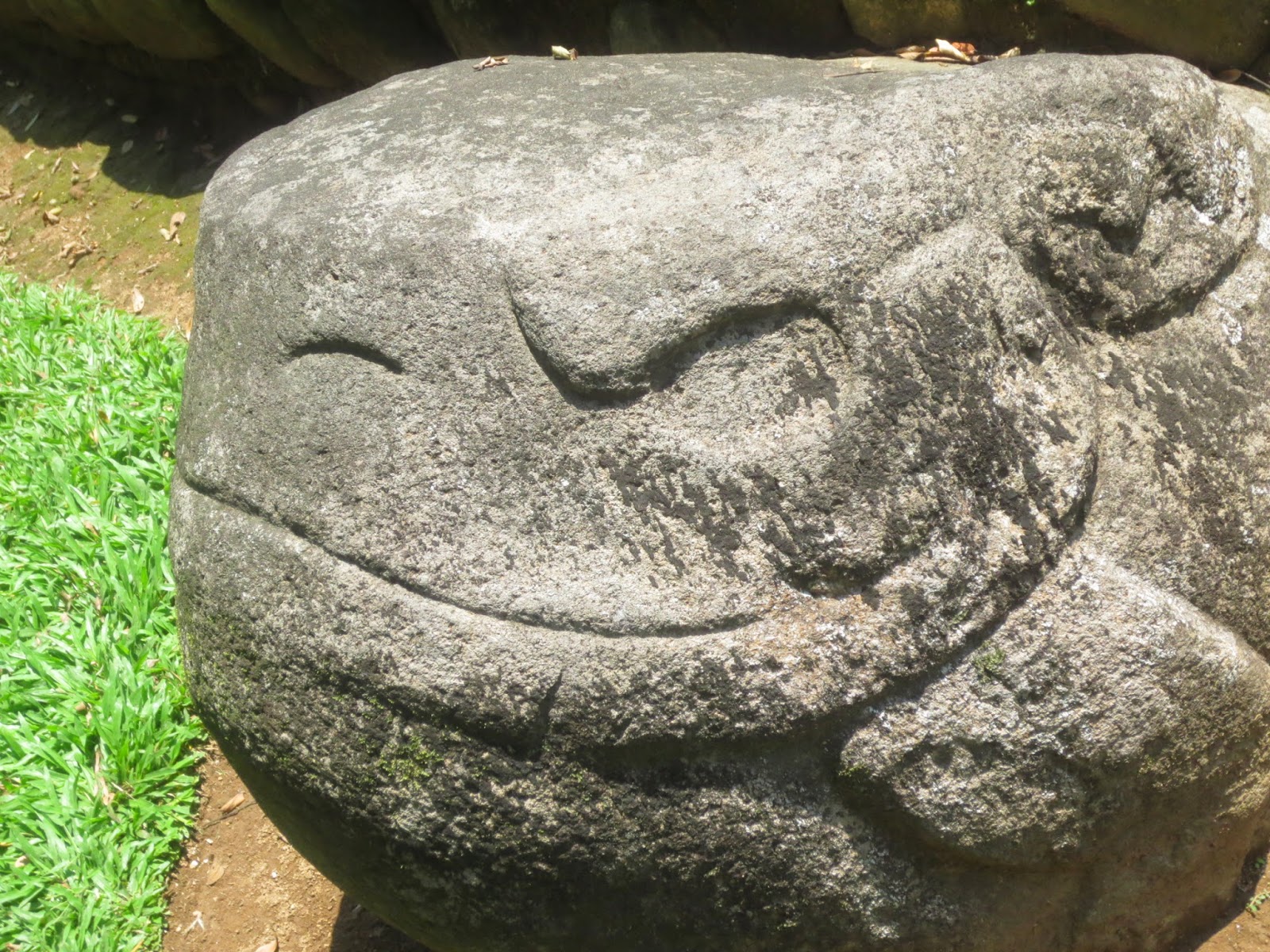
Several
hundred stone monuments have been unearthed on the ten terraces that cover the
1600-acre property. Some feature the Olmec style with enormous heads and
potbellied figures, or the man-jaguar. Many others feature Mayan hieroglyphics
and the representation of important figures, often depicted in profile.
It’s
intriguing that both styles co-exist. The Olmec style statues don’t stop
suddenly and give way to a Mayan style. Nor were they destroyed when the Mayan
sculptures were erected. This suggests a shifting of cultural influences and a
sharing of artistic styles rather than domination due to one group conquering the other.
Tak’alik
Ab’aj was part of a trading route that stretched from Mexico in the north to El
Salvador in the south. It has been suggested that as traders moved from one
area to another, they brought with them cultural inspirations that influenced
the artwork of the settlements.
A royal
tomb was discovered in 2002, perhaps belonging to the city's last Mayan king.
Excavations
are still underway.